
Meta Quest 3 vs Meta Quest 2: Which VR Headset Wins in 2026?
Based on expert measurements from RTINGS and Road to VR, plus thousands of real user experiences
The short answer: Meta Quest 3 wins decisively. With 2X the GPU power, color passthrough for mixed reality, pancake lenses that make it 40% thinner, and a wider field of view, the Quest 3 is better in every meaningful way. The Quest 2 is discontinued and losing software support in 2026—there's no reason to choose it unless you're buying used at under $150. Get Meta Quest 3 on Amazon for $499 →
The Fighters
| Meta Quest 3 | Meta Quest 2 | |
|---|---|---|
| Price | $499 on Amazon | ~$150-200 used on Amazon |
| Best For | New VR buyers who want the best standalone experience | Budget buyers who only want basic VR gaming |
| Processor | Snapdragon XR2 Gen 2 | Snapdragon XR2 Gen 1 |
| Resolution | 2064 × 2208 per eye (4.5MP) | 1832 × 1920 per eye (3.5MP) |
| Passthrough | Full color (18 PPD) | Black & white only (4 PPD) |
| Storage | 512GB | 128GB / 256GB |
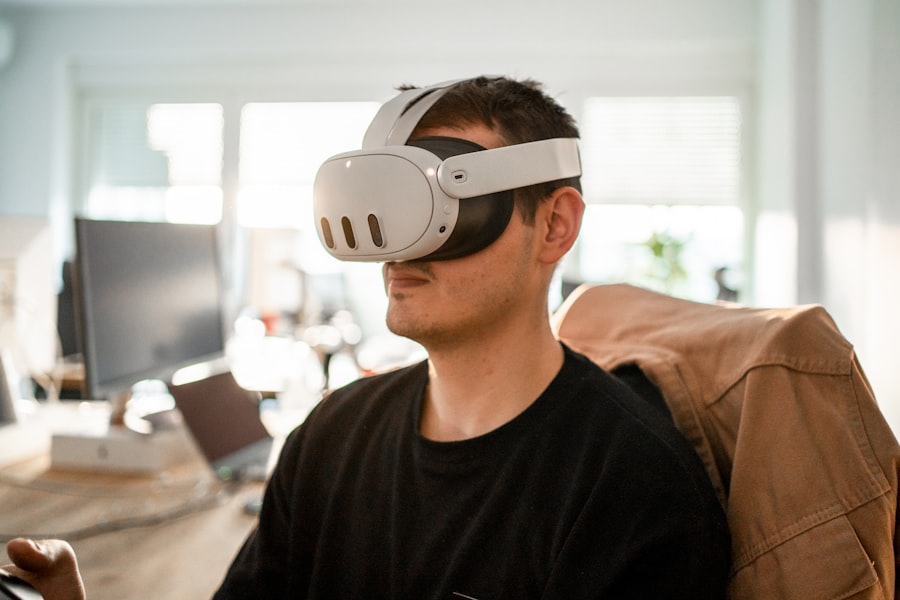
The Death Match: 6 Rounds, 1 Winner
We're scoring each round from 1-10. Higher score wins the round. Let's fight!
Round 1: Display Quality
The Quest 3's display upgrade is immediately noticeable. At 2064 × 2208 pixels per eye versus the Quest 2's 1832 × 1920, you're getting roughly 30% more pixels. But the real story is the pixel density—25 pixels per degree compared to 20 PPD on the Quest 2.
What does this mean in practice? The "screen door effect" that plagued the Quest 2 is virtually eliminated on the Quest 3. Text is sharp enough to read comfortably, menus look crisp, and fine details in games no longer blur into pixelated mush. Road to VR calls it "a generational leap in clarity."
The Quest 2 isn't bad—it was impressive in 2020—but holding it against the Quest 3 in 2026 shows its age. Text gets blurry, and the Fresnel lenses create noticeable "god rays" around bright objects.
| Meta Quest 3 | Meta Quest 2 |
|---|---|
| 9/10 | 6/10 |
Round 1 Winner: Meta Quest 3 — 30% more pixels and virtually no screen door effect make this a clear win.
Score after Round 1: Meta Quest 3 9 | Meta Quest 2 6
Round 2: Mixed Reality & Passthrough
This is where the Quest 3 absolutely destroys the Quest 2. The Quest 3 has full-color passthrough at 18 pixels per degree—that's 10X the resolution of the Quest 2's grainy black-and-white passthrough at just 4 PPD.
On the Quest 3, you can actually read your phone screen through the passthrough camera. You can see your furniture, your pets, and even play mixed reality games where virtual objects interact with your real room. The depth sensor maps your space accurately, enabling experiences the Quest 2 simply cannot provide.
The Quest 2's passthrough? It's good enough to find your drink without removing the headset. That's about it. It's grainy, monochrome, and has so much latency that walking around feels disorienting. Tom's Guide describes it as "only useful for quick boundary checks."
If you want mixed reality—and in 2026, you should—the Quest 3 is your only option.
| Meta Quest 3 | Meta Quest 2 |
|---|---|
| 10/10 | 3/10 |
Round 2 Winner: Meta Quest 3 — Full-color passthrough versus grainy black-and-white isn't even close.
Score after Round 2: Meta Quest 3 19 | Meta Quest 2 9
Round 3: Performance & Graphics
The Snapdragon XR2 Gen 2 in the Quest 3 delivers 2X the GPU power and 30% faster CPU performance than the Quest 2's XR2 Gen 1. Combined with 8GB of RAM versus 6GB, the Quest 3 handles graphically intense games that would choke the Quest 2.
Games like Red Matter 2 and Walking Dead: Saints & Sinners show the biggest differences. On Quest 3, you get better textures, improved lighting, smoother frame rates, and shorter loading times. Android Central notes that "every Quest 2 game works on Quest 3, but Quest 3 games show noticeable improvements in detail, coloring, and shading."
The Quest 2 still runs most VR games competently. But some newer titles won't release for Quest 2 at all, and the ones that do often look noticeably worse. The performance gap will only widen as developers target the newer hardware.

| Meta Quest 3 | Meta Quest 2 |
|---|---|
| 9/10 | 6/10 |
Round 3 Winner: Meta Quest 3 — Double the GPU power means better graphics and future-proofing.
Score after Round 3: Meta Quest 3 28 | Meta Quest 2 15
Round 4: Comfort & Design
The Quest 3's pancake lenses are a game-changer for comfort. They allow the headset to be 40% thinner than the Quest 2's bulky Fresnel lens design. At 515g versus 503g, the Quest 3 is slightly heavier on paper, but the slimmer profile distributes weight better and reduces the "face-diving" sensation during long sessions.
Both headsets share a common weakness: their stock straps are mediocre. The Quest 3's fabric strap can dig in uncomfortably after 30-45 minutes. The Quest 2's elastic strap causes face pressure even sooner. Most serious users buy aftermarket Elite Straps for either headset.
The Quest 3's ring-less Touch Plus controllers are more ergonomic than the Quest 2's ringed Touch v3 controllers. Your hands can get closer together without the rings clashing—a noticeable improvement in games requiring close hand movements.
| Meta Quest 3 | Meta Quest 2 |
|---|---|
| 7/10 | 6/10 |
Round 4 Winner: Meta Quest 3 — 40% thinner profile and ring-less controllers edge out the win despite similar strap issues.
Score after Round 4: Meta Quest 3 35 | Meta Quest 2 21
Round 5: Software Support & Longevity
This round is decisive. Meta has announced that Quest 2 software support ends in 2026. Existing games will continue working, but no new features, security updates, or optimizations are coming. Some newer games won't release for Quest 2 at all.
The Quest 3 has full ongoing support, exclusive mixed reality apps, and will receive new features for years to come. It also has backward compatibility with every Quest 2 game, so you lose nothing from the older library.
Space4Games summarizes it well: "Meta Quest 3 remains the most well-rounded VR/MR headset under $1,000 and the clear recommendation for demanding users."
Buying a Quest 2 in 2026 means buying into a dead platform. The Quest 3 is the future.
| Meta Quest 3 | Meta Quest 2 |
|---|---|
| 9/10 | 4/10 |
Round 5 Winner: Meta Quest 3 — Active support versus discontinued platform is no contest.
Score after Round 5: Meta Quest 3 44 | Meta Quest 2 25
Round 6: Value for Money
Here's where things get interesting. The Quest 3 costs $499 new. The Quest 2 is discontinued and only available used for $150-200. That's a significant price difference.
But value isn't just about the lowest price—it's about what you get for your money. The Quest 3 delivers 2X the performance, vastly better display, full mixed reality capabilities, and years of software support. The Quest 2 gives you last-gen hardware that's already losing support.
If you're spending $150 on a used Quest 2, you're buying something that will feel outdated within a year. If you're spending $499 on a Quest 3, you're buying the current flagship that will serve you for 3-5 years.
For true budget buyers, consider the Quest 3S at $299—it uses the Quest 3's processor with Quest 2's lenses, offering a much better value than a used Quest 2.

| Meta Quest 3 | Meta Quest 2 |
|---|---|
| 8/10 | 6/10 |
Round 6 Winner: Meta Quest 3 — Better long-term value despite higher upfront cost.
Final Score
| Product | Total Score | Verdict |
|---|---|---|
| Meta Quest 3 | 52/60 | WINNER |
| Meta Quest 2 | 31/60 |
The Winner: Meta Quest 3
The Meta Quest 3 wins decisively across every category. It's not even close. The Quest 3 offers a significantly better display with 30% more pixels and no screen door effect. Its color passthrough enables an entirely new category of mixed reality experiences the Quest 2 can't touch. The 2X GPU performance ensures smoother gameplay and future-proofing. And crucially, it has years of software support ahead while the Quest 2 is being abandoned.
Yes, the Quest 3 costs more. But buying a Quest 2 in 2026 is like buying a flip phone because it's cheaper than a smartphone—you're saving money on something that won't serve your needs. The Quest 3 is the better investment by every measure.
If $499 is too steep, look at the Quest 3S at $299. It uses the same processor as the Quest 3, offers color passthrough (though lower resolution), and will receive full software support. It's a far better budget option than a discontinued Quest 2.
Ready to buy the winner? Get Meta Quest 3 on Amazon →
When the Loser Actually Wins
Meta Quest 2 isn't right for anyone buying new in 2026, but it might make sense if:
- You find one used for under $100 and just want to try VR casually
- You're buying for a young child who might break it quickly
- You only want to play a few specific older games and don't care about new releases
- You're using it as a secondary headset for guests
Quest 2 might be right for you: Check used prices on Amazon →
Frequently Asked Questions
Can Quest 2 games play on Quest 3?
Yes, 100% backward compatibility. Every Quest 2 game works on Quest 3, often with better graphics and performance. You lose nothing by upgrading.
Is Quest 2 still worth buying in 2026?
Only if you find one used for under $100-150 and accept that software support is ending. For any serious VR use, the Quest 3 or Quest 3S are far better investments.
What's the difference between Quest 3 and Quest 3S?
Quest 3S ($299) uses the same Snapdragon XR2 Gen 2 processor as Quest 3 but has the Quest 2's Fresnel lenses and lower-resolution passthrough. It's the best budget option in 2026—better than used Quest 2.
How long does Quest 3 battery last?
About 2-2.5 hours depending on the game. This is similar to Quest 2's 1.5-2.5 hours. Both benefit from portable battery packs or link cables for extended sessions.
Does Quest 3 require a PC?
No, both Quest 3 and Quest 2 are standalone headsets. However, both can connect to a gaming PC via Link cable or Air Link for access to PC VR games if you want more graphically demanding experiences.