
Massage Gun vs Foam Roller: Which Recovery Tool Actually Works?
Based on scientific studies, physical therapist recommendations, and real user experiences
The short answer: The massage gun wins for most people. It delivers faster results (5 minutes vs 15 minutes for equivalent recovery benefits), targets hard-to-reach areas without awkward body positioning, and scientific studies show it's more effective at reducing muscle tension. However, foam rollers cost 80% less and work better for large muscle groups. Get the Hypervolt Go 2 on Amazon for $129 →
The Fighters
| Massage Gun | Foam Roller | |
|---|---|---|
| Price | $129-$600 on Amazon | $15-$40 on Amazon |
| Best For | Targeted deep tissue relief | Large muscle group mobility |
| Time Required | 5 minutes per session | 15 minutes for similar results |
| Portability | Highly portable (1-3 lbs) | Bulky (hard to travel with) |
| Learning Curve | Point and apply | Requires positioning skill |

The Death Match: 6 Rounds, 1 Winner
We're scoring each round from 1-10. Higher score wins the round. Let's fight!
Round 1: Effectiveness for Muscle Recovery
Both tools claim to speed recovery, but the science tells a clear story. A study published in the International Journal of Sports Physical Therapy found that athletes who used massage guns for 5 minutes experienced similar muscle recovery benefits to those who foam rolled for 15 minutes. That's three times faster for the same result.
Research from Istanbul University showed massage guns actually increased muscle thickness (a sign of blood flow and recovery), while foam rollers decreased it. The massage gun's percussive action penetrates deeper into muscle tissue.
However, a meta-analysis of 21 foam rolling studies concluded that foam rolling effects are "rather minor and partially negligible." Not a ringing endorsement for either tool, but the massage gun's time efficiency gives it the edge.
| Massage Gun | Foam Roller |
|---|---|
| 8/10 | 6/10 |
Round 1 Winner: Massage Gun — Three times faster for equivalent recovery benefits
Score after Round 1: Massage Gun 8 | Foam Roller 6
Round 2: Ease of Use
Here's where the massage gun dominates. Point it at a sore muscle, turn it on, and let it work. No contorting your body, no balancing on a cylinder, no wondering if you're doing it right.
Foam rolling requires you to position your entire body weight on a cylinder and roll back and forth while maintaining balance. As Petersen Physical Therapy notes, foam rolling "can be awkward and uncomfortable" and "hard to target tricky spots like glutes or traps."
One LetsRun forum user summarized it perfectly: "I think for a trigger point, the massage gun would work better, but for general soreness, a foam roller and massage stick seem to beat it." That's fair—but most people need trigger point relief more than generalized work.
User reviews consistently mention foam rollers being "hard as a rock" (Walmart reviews) and causing unexpected discomfort. The massage gun lets you control pressure instantly.
| Massage Gun | Foam Roller |
|---|---|
| 9/10 | 5/10 |
Round 2 Winner: Massage Gun — No awkward positioning or balance required
Score after Round 2: Massage Gun 17 | Foam Roller 11
Round 3: Targeting Hard-to-Reach Areas
Try foam rolling your upper back. Now try your shoulders. Now your neck. It's nearly impossible without help or extreme flexibility.
The massage gun reaches anywhere your arm can reach—and with attachments designed for different body parts. Cleveland Clinic physical therapists recommend massage guns specifically for "targeting hard-to-reach areas like your upper back, shoulders, or glutes."
Foam rollers excel at large, accessible muscle groups: quads, hamstrings, calves, and IT band. But even Hyperice (which sells both products) admits foam rollers have "limited range of application" compared to massage guns.
That said, massage guns still struggle with the "square" of your upper back without help from someone else. But they're still far superior to trying to foam roll that area.
| Massage Gun | Foam Roller |
|---|---|
| 9/10 | 4/10 |
Round 3 Winner: Massage Gun — Reaches shoulders, neck, and glutes without contortionist moves
Round 4: Value for Money
This is where the foam roller fights back hard.
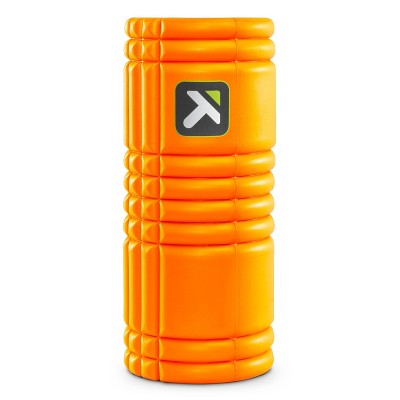
A quality foam roller like the TriggerPoint GRID costs $37. A basic LuxFit high-density roller runs just $15. No batteries, no charging, no maintenance. It'll last years with proper care.
Entry-level massage guns start around $30-$80, but Consumer Reports and Garage Gym Reviews both warn that budget models often have battery issues, motor failures, and some "never even powered on."
For a reliable massage gun, you're looking at $129 minimum (Hypervolt Go 2) up to $600+ for premium models like the Theragun Pro Plus. That's 3-15x more expensive than a solid foam roller.
The foam roller requires no electricity, has no moving parts to break, and won't become obsolete. The TriggerPoint GRID has a 500-lb weight limit and is "guaranteed to keep its shape and not chip or crack for years" according to Rogue Fitness.
| Massage Gun | Foam Roller |
|---|---|
| 5/10 | 9/10 |
Round 4 Winner: Foam Roller — 80% cheaper with zero maintenance costs
Score after Round 4: Massage Gun 31 | Foam Roller 24
Round 5: Scientific Research Support
Both tools have research backing them—but neither is a miracle worker.
A La Trobe University study (2025) tested both tools on trained athletes and found something surprising: both foam rolling AND massage gun use during warm-up actually reduced jumping performance slightly. Neither improved acute athletic performance.
That said, physical therapists widely recommend both tools. PT Sandra Gail Frayna notes that "incorporating foam rolling in conjunction with dynamic and static stretching will have a positive impact on performance and recovery."
For post-workout recovery specifically, Utah Health recommends massage guns at low frequencies (<40 Hz) for prolonged periods (>2 min per muscle group) to decrease muscle stiffness and soreness.
The Journal of Sports Rehabilitation found foam rolling for 90 seconds can increase range of motion by 10-15%, though this effect only lasts about 10 minutes. Massage guns focus more on tension reduction than flexibility gains.
| Massage Gun | Foam Roller |
|---|---|
| 7/10 | 7/10 |
Round 5 Winner: Tie — Both have modest scientific support, neither is magical
Score after Round 5: Massage Gun 38 | Foam Roller 31
Round 6: Safety and Risk of Injury
Both tools can cause harm if misused—but the consequences differ.
Hackensack Meridian Health warns that massage gun "overuse can overstimulate the area, causing the body to tighten up further." Cleveland Clinic adds that massage guns should never be used on "sensitive areas, injuries, open wounds, bruises, bony areas, or joint replacements."
People on blood thinners face increased bruising risk with massage guns. Those with musculoskeletal conditions like arthritis or osteoporosis should consult a physician first.
Foam rollers carry different risks. Users frequently complain about unexpected pain from firmness levels. One Walmart reviewer wrote: "I didn't know high density meant hard as a rock. I expected thick foam but this one hurt my back." The intensity can cause harm for beginners who don't know what they're doing.
The RumbleRoller is "not recommended for beginners because of the intensity of its protrusions." Foam rolling also puts stress on joints and requires balancing your body weight—potentially problematic for those with balance issues or joint problems.
Neither tool is dangerous when used properly, but the massage gun offers more control over intensity in real-time.
| Massage Gun | Foam Roller |
|---|---|
| 7/10 | 6/10 |
Round 6 Winner: Massage Gun — More control over pressure intensity
Final Score
| Product | Total Score | Verdict |
|---|---|---|
| Massage Gun | 45/60 | WINNER |
| Foam Roller | 37/60 |
The Winner: Massage Gun
The massage gun takes this death match with a convincing 45-37 victory. It's faster (5 minutes vs 15 minutes for equivalent results), easier to use (no awkward positioning), and reaches areas foam rollers simply can't touch.
The scientific evidence, while modest for both tools, slightly favors massage guns for targeted muscle tension relief. Physical therapists at Cleveland Clinic, University of Utah Health, and Hackensack Meridian Health all recommend massage guns as effective recovery tools.
The foam roller's only clear advantage is price—and that's significant. A $15 LuxFit does work, just slower and with more effort. If budget is your primary concern, the foam roller delivers decent results for a fraction of the cost.
But if you value your time and want the most effective recovery tool, the massage gun is the clear winner.
Ready to buy the winner? Get the Hypervolt Go 2 on Amazon for $129 →
When the Loser Actually Wins
The Foam Roller isn't right for everyone, but it's the better choice if:
- You're on a tight budget: At $15-$40, foam rollers cost 80%+ less than quality massage guns
- You want to work large muscle groups: Quads, hamstrings, IT band, and back respond well to the broad surface area
- You prioritize flexibility over tension relief: Research shows foam rolling improves range of motion by 10-15% (for about 10 minutes)
- You want something that never needs charging: Zero batteries, zero maintenance, zero obsolescence
- You're a beginner to myofascial release: Softer foam rollers provide gentler introduction than percussive therapy
Foam Roller might be right for you: Check the TriggerPoint GRID price on Amazon →
Frequently Asked Questions
Can I use both a massage gun and foam roller?
Yes—many physical therapists recommend exactly this. Use the foam roller for warm-ups and large muscle groups, then the massage gun for targeted trigger point relief and hard-to-reach areas. Petersen Physical Therapy notes that "both foam rollers and massage guns have their place in recovery."
How long should I use a massage gun on each muscle?
Start with 10-30 seconds per area when you're new. Utah Health recommends working up to 2 minutes per muscle group, using low frequencies (<40 Hz) for recovery. Never exceed 2 minutes on any single spot in one session.
Are cheap massage guns worth buying?
Proceed with caution. Consumer Reports and Massage Gun Advice document widespread issues with budget models: batteries dying within months, motors failing, devices that "never even powered on." The Hypervolt Go 2 at $129 is the minimum we'd recommend for reliable performance.
Should I foam roll before or after a workout?
Before. Physical therapist Phil Tam from Bespoke Treatments recommends "incorporating foam rolling in conjunction with dynamic and static stretching" as part of your warm-up for "positive impact on performance and recovery." Save the massage gun for post-workout tension relief.
Sources
- Consumer Reports - Massage Guns 2026
- Garage Gym Reviews - Best Massage Guns 2026
- Garage Gym Reviews - Foam Roller vs Massage Gun
- PMC - Warm-Up Performance Study
- PMC - Massage Gun Systematic Review
- Cleveland Clinic - Do Massage Guns Work?
- Utah Health - Massage Gun Safety
- Petersen PT - Foam Roller vs Massage Gun
- Petersen PT - Benefits of Foam Rolling
- Hyperice - Foam Roller vs Massage Gun
- ResearchGate - Muscle Architecture Study
- LetsRun Forum Discussion
- Hackensack Meridian Health - PT Explains