
Garmin Forerunner vs Vivoactive: Which Running Watch Actually Wins?
Based on expert testing from TechGearLab, Garage Gym Reviews, and real user experiences from Garmin Forums
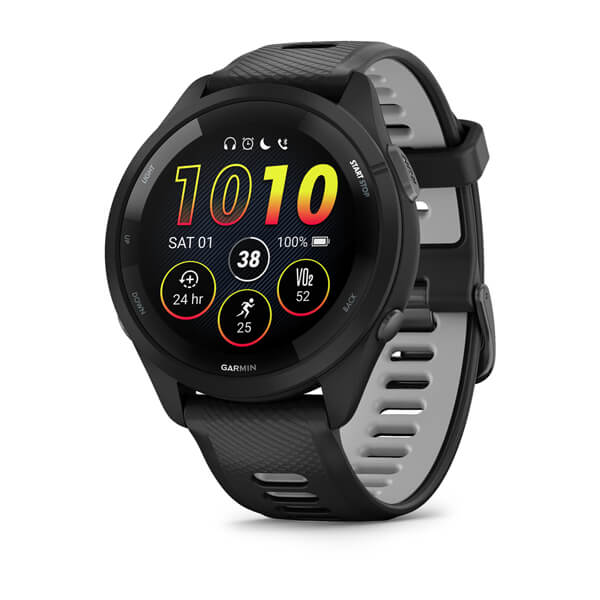
The short answer: The Garmin Forerunner 265 wins for serious runners who need advanced training metrics, multi-band GPS accuracy, and structured workout features. But the Vivoactive 5 is the smarter buy for casual fitness users who want a lightweight, affordable smartwatch that tracks their runs without overcomplicating things. If you're training for a marathon, go Forerunner. If you just want to track daily workouts and health stats, the Vivoactive saves you $100+ and weighs 11g less. Get the Forerunner 265 on Amazon for $300 →
The Fighters
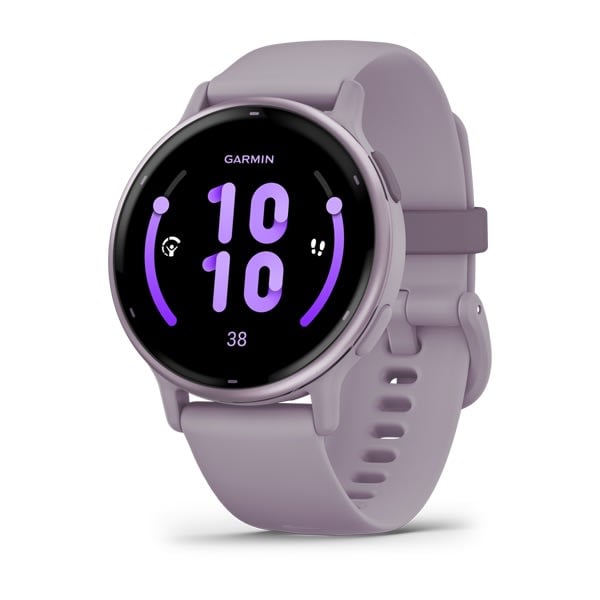
| Garmin Forerunner 265 | Garmin Vivoactive 5 | |
|---|---|---|
| Price | $300 on Amazon | $192 on Amazon |
| Best For | Serious runners, triathletes | Casual fitness, daily wear |
| Display | 1.3" AMOLED (416x416px) | 1.2" AMOLED (390x390px) |
| Weight | 47g | 36g |
| GPS Type | Multi-band dual-frequency | Single-band |
| Battery (Watch) | 13 days | 11 days |
| Battery (GPS) | 20 hours | 21 hours |
The Death Match: 6 Rounds, 1 Winner
We're scoring each round from 1-10. Higher score wins the round. Let's fight!
Round 1: GPS Accuracy
This is where the Forerunner 265 immediately separates itself. It features multi-band GNSS support with dual-frequency positioning, meaning it pulls GPS data from multiple satellites simultaneously. According to Bandletic, this allows the watch to "fetch GPS data from other satellites" when connectivity is poor, "improving GPS reliability, dependability, and accuracy."
The Vivoactive 5 uses single-band GPS (GPS, GLONASS, Galileo, BeiDou). It's accurate in open areas—PhoneArena found it tracked within ±5-10 meters in clear conditions. But in urban environments or heavy tree cover, errors jump to ±15-20 meters. If you run city streets between tall buildings or forested trails, the Forerunner's multi-band GPS is noticeably more reliable.
| Garmin Forerunner 265 | Garmin Vivoactive 5 |
|---|---|
| 9/10 | 7/10 |
Round 1 Winner: Forerunner 265 — Multi-band GPS delivers superior accuracy in challenging environments where the Vivoactive struggles.
Score after Round 1: Forerunner 265 9 | Vivoactive 5 7
Round 2: Training Features
The Forerunner 265 was built for structured training. It includes Training Readiness (telling you if your body is prepared to push hard), Training Load analysis, a guided lactate threshold test (chest strap required), and Virtual Partner so you can race against your previous activities. For navigation, it offers turn-by-turn course guidance—critical for trail runners exploring new routes.
The Vivoactive 5? None of that. According to Garmin Forums users, "The Forerunner 265 has a bunch of runner/cyclist training metrics like Training Readiness, Training Load, etc., which the Vivoactive 5 does not have." The Vivoactive can only navigate back to your starting point or to saved locations—no route guidance.
Instead, the Vivoactive 5 focuses on lifestyle features like Meditation and Nap Detection. Great for wellness; useless for race prep.
| Garmin Forerunner 265 | Garmin Vivoactive 5 |
|---|---|
| 9/10 | 5/10 |
Round 2 Winner: Forerunner 265 — The training feature gap is massive. If you follow structured plans, there's no comparison.
Score after Round 2: Forerunner 265 18 | Vivoactive 5 12
Round 3: Heart Rate Accuracy
Here's where things get interesting—and the Vivoactive actually pulls ahead.
Garage Gym Reviews tested the Vivoactive 5's heart rate sensor and found it accurate to ±2.30 BPM compared to a Polar chest strap. That's excellent for an optical sensor. The only limitation: "During recovery periods after intense intervals, the Vivoactive 5 had a slight lag in detecting these changes. While it did catch up to the actual heart rate within a few seconds, this brief delay was consistently noticeable."
The Forerunner 265's optical HR sensor gets hammered by users. One Garmin Forums poster stated bluntly: "the onboard optical HR sensor sucks" and "anything based on the internal heart rate sensor can just be ignored because it's based on garbage data." Multiple users recommend buying an external chest strap like the Polar H10 to get usable data.
| Garmin Forerunner 265 | Garmin Vivoactive 5 |
|---|---|
| 6/10 | 8/10 |
Round 3 Winner: Vivoactive 5 — Surprisingly, the cheaper watch has more reliable wrist-based heart rate tracking.
Score after Round 3: Forerunner 265 24 | Vivoactive 5 20
Round 4: Design & Comfort
Weight matters when you're logging miles. The Vivoactive 5 weighs just 36g (23g without strap) versus the Forerunner 265's 47g. That 11g difference is noticeable over a long run. The Vivoactive's 42mm case also fits smaller wrists better—the Forerunner's 46mm case looks chunky on slender arms.
However, the Forerunner offers 4 physical buttons versus the Vivoactive's 2, which makes mid-run adjustments easier with sweaty fingers. Wareable notes that "Some Reddit users prefer Forerunner watches because they have a raised bezel" providing better screen protection compared to "the Vivoactive with the rounded edge of glass."
Build quality concerns exist on both sides. Road.cc warns that the Forerunner's "plastic casing gives it a cheaper look and feel. It's easier to scratch and dent in daily life"—they strongly recommend a screen protector.
| Garmin Forerunner 265 | Garmin Vivoactive 5 |
|---|---|
| 7/10 | 8/10 |
Round 4 Winner: Vivoactive 5 — Lighter, sleeker, and more comfortable for all-day wear.
Score after Round 4: Forerunner 265 31 | Vivoactive 5 28
Round 5: Value for Money
At MSRP, the Forerunner 265 costs $449.99 while the Vivoactive 5 costs $299.99—a $150 difference. But current January 2026 sales have the Forerunner at $300 (Men's Journal) and the Vivoactive 5 at just $192 (Gizmodo).
That's still a $108 gap. The question: is multi-band GPS, Training Readiness, and turn-by-turn navigation worth $108 more? For casual runners who just want accurate distance tracking and health metrics, the answer is no. The Vivoactive 5 at $192 is a steal.
But if you're training for specific time goals, following a structured plan, or running in GPS-challenged environments, the Forerunner's premium features justify the cost. You're essentially paying $108 for a dedicated coaching system.
| Garmin Forerunner 265 | Garmin Vivoactive 5 |
|---|---|
| 7/10 | 9/10 |
Round 5 Winner: Vivoactive 5 — At $192 on sale, it's the better value for most fitness users.
Score after Round 5: Forerunner 265 38 | Vivoactive 5 37
Round 6: Battery Life & Reliability
Both watches deliver solid battery life. The Forerunner 265 claims 13 days in smartwatch mode versus the Vivoactive 5's 11 days. In GPS mode, they're nearly identical—20 hours (Forerunner) vs 21 hours (Vivoactive).
Real-world reliability tells a different story. Some Vivoactive 5 users report major battery problems. One Garmin Forums user with a brand new unit complained: "I still cannot even get 24 hours out of one full charge."
The Forerunner 265 also has firmware issues. After update 17.xx, users reported "Training Readiness not updating after Zwift activities" and calorie sync problems. The HRM Pro pairing can bug out, causing the watch to double-count stats.
T3 reports that a recent Vivoactive 5 software update adds a new Battery Manager letting owners see exactly which features drain power—a useful troubleshooting tool the Forerunner lacks.

| Garmin Forerunner 265 | Garmin Vivoactive 5 |
|---|---|
| 7/10 | 7/10 |
Round 6 Winner: Tie — Both have 2-week battery claims with firmware quirks. Neither is perfect.
Final Score
| Product | Total Score | Verdict |
|---|---|---|
| Garmin Forerunner 265 | 45/60 | WINNER |
| Garmin Vivoactive 5 | 44/60 |
The Winner: Garmin Forerunner 265
The Forerunner 265 wins by a single point, but the margin reflects a genuine truth: these watches serve different purposes. The Forerunner's multi-band GPS accuracy, Training Readiness metrics, lactate threshold testing, and turn-by-turn navigation make it the superior choice for anyone who trains with structure. If you're following a marathon plan, working with a coach, or running technical routes, the Forerunner's premium features will actively help you improve.
That said, the Vivoactive 5 won three rounds—heart rate accuracy, comfort, and value. Its ±2.30 BPM heart rate accuracy beat the Forerunner's criticized optical sensor. At 11g lighter and $108 cheaper, the Vivoactive is the more practical daily companion for users who prioritize comfort and affordability over training depth.
The Forerunner's victory comes from its core mission: making you a better runner. The advanced metrics, better GPS, and navigation features justify the price for serious athletes. But casual fitness users shouldn't feel pressured to pay more for features they'll never use.
Ready to buy the winner? Get the Garmin Forerunner 265 on Amazon for $300 →
When the Loser Actually Wins
The Garmin Vivoactive 5 isn't right for everyone, but it's the better choice if:
- You're a casual runner who tracks distance and pace but doesn't follow structured training plans
- You want all-day comfort from a lighter watch (36g vs 47g) that fits smaller wrists
- You're budget-conscious and want to save $108 at current sale prices
- You prioritize lifestyle features like meditation tracking and nap detection
- You run in open areas where single-band GPS provides adequate accuracy
- You want reliable wrist heart rate without buying an external chest strap
The Vivoactive 5 might be right for you: Check price on Amazon for $192 →
Frequently Asked Questions

Is the Forerunner 265 worth $100 more than the Vivoactive 5?
For serious runners, yes. You're paying for multi-band GPS that stays accurate in cities and forests, Training Readiness metrics that help prevent overtraining, and turn-by-turn navigation for exploring new routes. If you train with structure or race competitively, these features will help you improve. For casual fitness users, no—the Vivoactive 5 tracks runs accurately enough and costs significantly less.
Which has better heart rate accuracy?
Surprisingly, the Vivoactive 5. Garage Gym Reviews tested it at ±2.30 BPM accuracy. The Forerunner 265's optical heart rate sensor has been widely criticized by users as unreliable. If accurate wrist-based HR matters to you (and you don't want a chest strap), the cheaper watch actually performs better.
Can the Vivoactive 5 handle marathon training?
It can track your runs accurately, but it lacks the Forerunner's training-specific features. No Training Readiness to tell you when to rest. No lactate threshold testing. No Virtual Partner to race your past performances. No turn-by-turn course navigation. You can absolutely run a marathon wearing a Vivoactive 5, but the Forerunner 265 provides tools designed specifically to help you train smarter.
Which watch has better battery life?
They're similar. The Forerunner 265 claims 13 days in smartwatch mode versus 11 days for the Vivoactive 5. In GPS mode, the Vivoactive actually edges ahead (21 hours vs 20 hours). Both watches have firmware issues that can cause unexpected battery drain—check Garmin Forums if you experience problems.
Sources
- Bandletic - Garmin Vivoactive 5 vs Forerunner 265 Comparison
- Garage Gym Reviews - Garmin Vivoactive 5 Review
- Garmin Forums - Forerunner 265 Issues Discussion
- Garmin Forums - Vivoactive vs FR265 Discussion
- Garmin Forums - Vivoactive 5 Battery Issues
- Gizmodo - Vivoactive 5 Sale January 2026
- Men's Journal - Forerunner 265 Sale January 2026
- PhoneArena - Vivoactive 5 vs Forerunner 265 Specs
- Road.cc - Garmin Forerunner 265 Review
- T3 - Vivoactive 5 Battery Update
- TechGearLab - Forerunner 265 Review
- Wareable - Garmin Vivoactive 6 vs Forerunner 165