
Garmin Forerunner vs Venu: Runner's Watch or Lifestyle Smartwatch?
Based on expert reviews from DC Rainmaker, Tom's Guide, and real user experiences from Garmin Forums
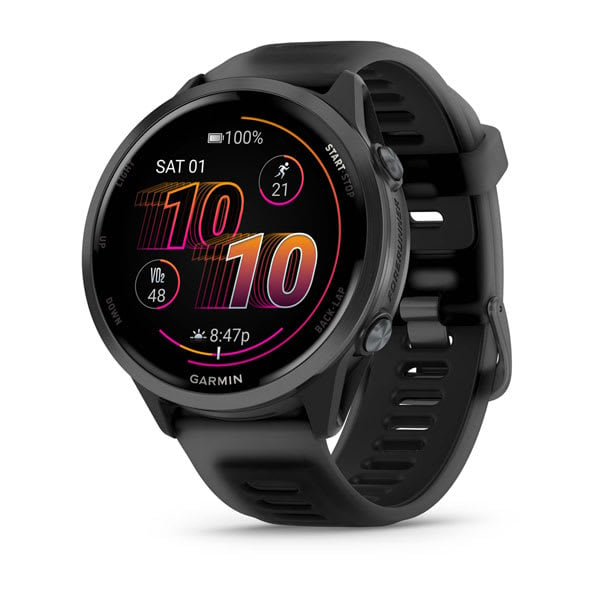
The short answer: If running is your primary sport and you care about training data over style, the Garmin Forerunner wins. Its 5-button interface works better mid-workout, GPS battery lasts significantly longer, and you get triathlon support plus navigation. The Venu looks better at brunch but falls short where serious training matters. Get the Forerunner 570 on Amazon for $550 →
The Fighters
| Garmin Forerunner | Garmin Venu | |
|---|---|---|
| Price | $550 on Amazon | $550 on Amazon |
| Best For | Serious runners, triathletes | Gym-goers, lifestyle fitness |
| Weight | 42-56g | 30-40g |
| Battery (GPS) | 20-26 hours | 16-20 hours |
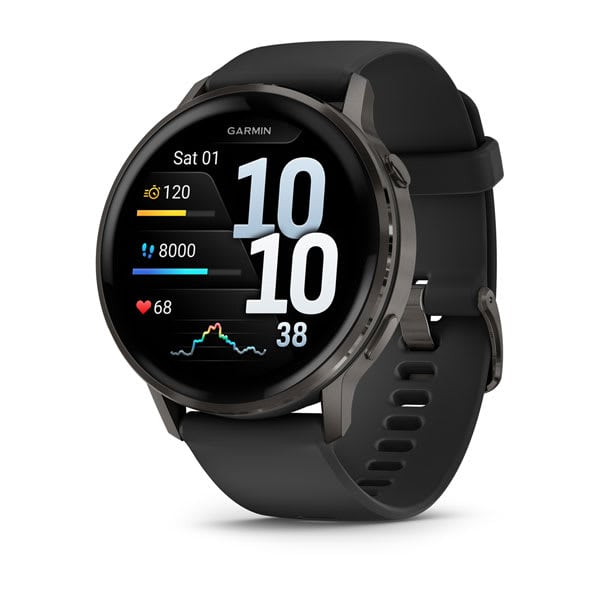
| Buttons | 5 physical buttons | 2 buttons + touchscreen |
The Death Match: 6 Rounds, 1 Winner
We're scoring each round from 1-10. Higher score wins the round. Let's fight!
Round 1: Running & Training Features
This is where the Forerunner line was born to dominate. The Forerunner 570 and 970 include triathlon mode with auto-transitions between swim, bike, and run. You get Duathlon mode, Pool Triathlon mode, and Brick training for those brutal back-to-back sessions. The Venu? It tracks running just fine, but lacks these specialized multi-sport features.
Navigation is another Forerunner advantage. The 970 includes full topographic maps with point-to-point navigation, breadcrumb trails, TrackBack, and elevation profiles. Even the 570 offers UltraTrac mode for extended GPS tracking. The Venu 3 has no navigation at all, and the Venu 4's navigation is limited compared to Forerunner.
Running dynamics, race predictions, PacePro pacing strategy, and deeper Training Load analysis all favor the Forerunner. If you're training for a PR, the Forerunner speaks your language.
| Garmin Forerunner | Garmin Venu |
|---|---|
| 10/10 | 6/10 |
Round 1 Winner: Forerunner — Triathlon support, navigation, and advanced training metrics crush the Venu for serious runners
Score after Round 1: Forerunner 10 | Venu 6
Round 2: GPS Accuracy & Battery Life
Both watches use similar GPS chipsets and deliver comparable accuracy for daily runs. DC Rainmaker confirms "virtually identical results" between the Forerunner 970 and Venu X1 in accuracy testing. Both share the Elevate Gen5 optical HR sensor.
Where they diverge dramatically is battery life. In a 7-hour hiking test, the Venu X1 dropped to 6% remaining while the Forerunner 970 retained 70-80%. The Venu X1 consumed approximately 12-14% battery per hour during GPS activities—brutal for longer sessions.
In smartwatch mode, the Forerunner 570 offers 11 days versus the Venu 4's 10-12 days—comparable. But in GPS mode, the Forerunner 970 stretches to 26 hours while the Venu X1 maxes out at 16 hours. For marathon runners and ultra-distance athletes, this matters.
| Garmin Forerunner | Garmin Venu |
|---|---|
| 9/10 | 7/10 |
Round 2 Winner: Forerunner — Significantly better GPS battery life for endurance activities
Score after Round 2: Forerunner 19 | Venu 13
Round 3: Design & Style
Here's where the Venu fights back hard. The Venu 3 wins on the design front with its stainless steel bezel (versus plastic on most Forerunners) and leather strap options. It's the kind of watch you can wear "to the gym, then straight to brunch without it screaming serious runner."
The Forerunner has "a more rugged design that may put you off wearing it casually." The 5-button interface, while superior for workouts, looks distinctly sporty. You won't mistake it for a dress watch.
Weight also favors Venu. The Venu 3 weighs just 30g—almost half the Forerunner 970's 56g. Even the Venu X1 at 34-40g feels noticeably lighter than the Forerunner 570's 42-50g. For all-day comfort, particularly for smaller wrists, Venu wins.
| Garmin Forerunner | Garmin Venu |
|---|---|
| 6/10 | 9/10 |
Round 3 Winner: Venu — Premium materials, lighter weight, and versatile styling for work and play
Score after Round 3: Forerunner 25 | Venu 22
Round 4: Health & Wellness Features
The Venu line emphasizes wellness beyond workouts. The Venu 4 includes an ECG app for on-demand heart rhythm measurements to detect abnormalities like atrial fibrillation—the Forerunner 570 lacks this. The Venu 4 also adds a built-in LED flashlight that the 570 doesn't have.
The Venu 3 detects naps during the day, which the Forerunner 265 currently does not. Venu also includes wheelchair-specific activity tracking and meditation reminders—features that reflect its broader health focus.
That said, the Forerunner 970 catches up with its own ECG capability and flashlight. At the flagship level, health features converge. But at the mid-tier $550 price point, the Venu 4 offers more wellness tools than the Forerunner 570.
| Garmin Forerunner | Garmin Venu |
|---|---|
| 7/10 | 9/10 |
Round 4 Winner: Venu — ECG, flashlight, and nap tracking give Venu the health edge at mid-tier pricing
Score after Round 4: Forerunner 32 | Venu 31
Round 5: Usability During Workouts
The Forerunner's 5-button layout dominates here. When you're mid-run, dripping sweat, and need to lap or pause, physical buttons work every time. Touchscreens—even good ones—can be finicky with wet fingers or gloved hands.
Garmin Forum users note the Venu's 2-button + touchscreen interface is "not intuitive" and "you can accidentally end a workout activity when just trying to pause it." The fewer buttons mean more touchscreen reliance during activities.
TechRadar identifies navigating the Venu operating system as "the only real design flaw"—you must scroll through with two buttons and the touchscreen, lacking a digital crown. This has "always been a problem with the Venu series."
| Garmin Forerunner | Garmin Venu |
|---|---|
| 9/10 | 6/10 |
Round 5 Winner: Forerunner — 5-button interface proves superior when you're in the middle of a hard workout
Score after Round 5: Forerunner 41 | Venu 37
Round 6: Value for Money
At identical $550 pricing, the Venu 4 and Forerunner 570 target different users. Tom's Guide declared "the Garmin Venu 4 wins the day" because it includes ECG and flashlight features the 570 lacks.
But here's the thing: if you're a runner buying a $550 Garmin, you probably care more about triathlon mode, navigation, and running dynamics than ECG readings. The Forerunner delivers better running value. The Venu delivers better lifestyle value.
At flagship level, the Forerunner 970 ($749) undercuts the Venu X1 ($800) while offering better GPS battery life and full topographic maps. The X1's gorgeous 2-inch display is impressive, but TechRadar notes its lack of Multi-Band GPS "rules it out as a serious option for marathoners."
| Garmin Forerunner | Garmin Venu |
|---|---|
| 8/10 | 8/10 |
Round 6 Winner: Tie — Both deliver excellent value for their respective target audiences

Final Score
| Product | Total Score | Verdict |
|---|---|---|
| Garmin Forerunner | 49/60 | WINNER |
| Garmin Venu | 45/60 |
The Winner: Garmin Forerunner
For runners, the Forerunner wins because it was designed for runners. The 5-button interface works better when you're gasping for air at mile 20. GPS battery lasts long enough for ultra-distance events. Triathlon mode, navigation, and deep training analytics serve athletes who are actually training—not just tracking.
As one forum user put it: "Venu is a really nice watch with solid basic functionality, but somewhat dumbed down compared to Forerunners." The Venu "is more about overall health and lifestyle management" while the Forerunner "will help you get fitter and faster."
If you're serious about running performance, spend your $550 on the Forerunner 570. You'll get the training tools that actually make you faster.
Ready to buy the winner? Get the Garmin Forerunner 570 on Amazon →
When the Venu Actually Wins
The Garmin Venu isn't right for everyone, but it's the better choice if:
- Style matters to you and you want a watch that looks good at the office, gym, and dinner
- You mix workout types across gym sessions, yoga, swimming, and occasional runs
- Health tracking is priority over race training—ECG, nap detection, and wellness features
- You have smaller wrists and want a lighter 30-40g watch versus 50g+
- You want the Venu X1's massive display and don't need Multi-Band GPS
- You're a casual athlete focused on general fitness rather than competitive racing
The Venu might be right for you: Check Venu 4 price on Amazon →
Frequently Asked Questions

Can I run with a Garmin Venu?
Yes. The Venu tracks runs with GPS, pace, heart rate, and basic metrics perfectly well. You'll get accurate data for casual running. What you'll miss are triathlon mode, advanced navigation, deeper training analytics, and the physical buttons that work better mid-workout. For casual joggers, Venu is fine. For marathon training, Forerunner is better.
Which has better GPS accuracy?
They're essentially identical. DC Rainmaker's testing showed "virtually identical results" between the Forerunner 970 and Venu X1. Both use similar GPS chipsets and the same Elevate Gen5 heart rate sensor. The difference is battery life—Forerunner lasts significantly longer in GPS mode.
Is the Venu X1 worth $800?
The Venu X1's 2-inch display is stunning and it's TechRadar's "most innovative Garmin watch in years." But it lacks Multi-Band GPS and ECG, and battery life drops to 2 days with always-on display. For $750, the Forerunner 970 offers better GPS battery, full maps, and more training features. The X1 wins on style; the 970 wins on substance.
Do both have music storage?
Yes. Both lines support offline music with 32GB storage and playback from Spotify, Deezer, and Amazon Music via Bluetooth headphones. This is a wash—no advantage either way.