
Food Processor vs Chopper: The Complete Kitchen Battle
Based on Consumer Reports testing, Reddit community insights, and thousands of real user reviews
The short answer: The food processor wins for most home cooks. With 6-16 cup capacity, 500-1200 watts of power, and the ability to slice, shred, grate, and knead dough, it handles everything a chopper can do plus much more. For serious meal prep, batch cooking, or families of 3+, invest in a quality food processor. Get the Cuisinart 14-Cup Food Processor on Amazon for $249 →
The Fighters
| Food Processor | Food Chopper | |
|---|---|---|
| Price | $60-$500 on Amazon | $15-$54 on Amazon |
| Best For | Families, meal prep, versatile cooking | Solo cooks, quick tasks, small kitchens |
| Capacity | 6-16 cups | 1-5 cups |
| Power | 500-1200 watts | 150-350 watts (electric) |
| Functions | Chop, slice, shred, grate, knead, puree | Chop, puree, mix |
The Death Match: 6 Rounds, 1 Winner
We're scoring each round from 1-10. Higher score wins the round. Let's fight!
Round 1: Capacity & Batch Size
The food processor dominates here. Standard bowls range from 7 to 16 cups, with Consumer Reports noting that "11 to 16 cups is ideal for cooking for crowds or batch-prepping multiple recipes". The Cuisinart Custom 14 and KitchenAid KFP1318 both offer 13-14 cup capacities that handle serious meal prep.
Food choppers max out at 5 cups—and most hold just 1-3 cups. As one frustrated user reported: "This chopper works, but you can't really put much in it." If you're making salsa for a party or shredding cheese for taco night, you'll be running multiple batches.
| Food Processor | Food Chopper |
|---|---|
| 9/10 | 4/10 |
Round 1 Winner: Food Processor — 3x the capacity means fewer batches and faster cooking
Score after Round 1: Food Processor 9 | Food Chopper 4
Round 2: Versatility & Functions
This is where the food processor earns its keep. According to Breville: "Food processors are extremely versatile and can quickly grind, shred, chop, slice, and puree almost any kind of food." The interchangeable blades and discs unlock capabilities that choppers simply can't match.
What processors do that choppers can't: - Slice and shred: Carrots for slaw, potatoes for gratin, cheese for pizza - Knead dough: Pizza, bread, pie crusts - Make nut butters: Almonds to almond butter in minutes - Grate hard cheeses: Parmesan in seconds
KitchenAid notes that choppers have "a single, multi-purpose blade that can chop, purée or mix"—and that's it. The blades aren't detachable, limiting what you can achieve.
| Food Processor | Food Chopper |
|---|---|
| 10/10 | 5/10 |
Round 2 Winner: Food Processor — Multiple blades unlock slicing, shredding, grating, and dough-making
Score after Round 2: Food Processor 19 | Food Chopper 9
Round 3: Power & Performance
Food processors pack serious motors. The Cuisinart Custom 14 runs at 720 watts, the Breville Sous Chef Pro delivers 960 watts, and the Ninja Professional XL hits 1,200 watts. This power matters when processing tough foods like hard cheeses, frozen fruits, or dense root vegetables.
Electric choppers typically run 150-350 watts—enough for soft vegetables but they struggle with anything demanding. Nemco's analysis found that processors "achieve the volume you need in half the time of a manual device."
Manual choppers require physical effort. Users report "having to put full weight on the handle to chop onions" and some describe the force required as "a workout."
| Food Processor | Food Chopper |
|---|---|
| 9/10 | 5/10 |
Round 3 Winner: Food Processor — 2-4x the wattage handles tough ingredients effortlessly
Score after Round 3: Food Processor 28 | Food Chopper 14

Round 4: Size & Storage
Here's where the chopper fights back. Food processors are large—the Cuisinart Custom 14 measures 11"L x 7.9"W x 14.8"H and weighs nearly 15 pounds. Consumer Reports acknowledges that "one drawback of food processors is their larger size, which can make storage more difficult."
Choppers are compact enough to leave on the counter permanently. KitchenAid recommends choppers for those with "a small kitchen or limited storage space."
The lighter KitchenAid KFP1318 at just 8.3 pounds is one of the few large processors designed for cabinet storage, but most full-size processors become permanent countertop fixtures.
| Food Processor | Food Chopper |
|---|---|
| 5/10 | 9/10 |
Round 4 Winner: Food Chopper — Compact design fits anywhere and stores easily
Score after Round 4: Food Processor 33 | Food Chopper 23
Round 5: Price & Value
Food choppers cost a fraction of processors. According to Consumer Reports, "choppers cost as little as $20, a fraction of the price of processors, which can cost more than $500."
Current pricing breakdown: - Manual choppers: $15-30 (Fullstar, Geedel) - Electric mini choppers: $25-50 (Ninja Master Prep) - Budget food processors: $25-60 (Hamilton Beach 3-Cup) - Mid-range food processors: $150-250 (KitchenAid KFP1318, Cuisinart Custom 14) - Premium food processors: $300-500 (Breville Sous Chef Pro)
However, one buying guide notes that "the Cuisinart 14-Cup represents the best long-term value with its proven 12-year track record." When you factor in longevity and versatility, processors often cost less per year of use.
| Food Processor | Food Chopper |
|---|---|
| 6/10 | 9/10 |
Round 5 Winner: Food Chopper — Entry price is 10-20x lower than quality processors
Score after Round 5: Food Processor 39 | Food Chopper 32
Round 6: Longevity & Reliability
Quality food processors are built to last 7-15 years with proper care. The warranty coverage tells the story:
- Breville Paradice 9: 30-year motor warranty
- Breville Sous Chef Pro 16: 25-year motor warranty
- Cuisinart Custom 14: 5-year motor, 3-year parts
- KitchenAid KFP1318: 1-year warranty
Consumer Reports testing reveals that Cuisinart introduced the food processor to the U.S. in the early 1970s and has maintained quality standards since.
Choppers have mixed durability. Users report "plastic parts can crack with heavy use" and "blades becoming dull over time." Manual models can fail catastrophically—one reviewer described how "the bottom accidentally popped off and pecans went ALL OVER my kitchen."
That said, Nemco points out that "manual food prep equipment is more reliable simply because they involve simpler designs, with fewer moving parts and no motors that can wear down."
| Food Processor | Food Chopper |
|---|---|
| 8/10 | 6/10 |
Round 6 Winner: Food Processor — 25-30 year motor warranties vs plastic that cracks under heavy use
Final Score
| Product | Total Score | Verdict |
|---|---|---|
| Food Processor | 47/60 | WINNER |
| Food Chopper | 38/60 |
The Winner: Food Processor
The food processor wins 4 of 6 rounds and takes the overall victory by 9 points. For anyone who cooks regularly, preps meals in advance, or feeds more than two people, the food processor delivers significantly more value.
The capacity difference alone is decisive—processing 14 cups vs 3 cups means finishing in one batch what would take a chopper five attempts. Add in slicing discs, shredding blades, and dough-kneading capability, and you're getting a genuine kitchen workhorse.
Yes, processors cost more upfront. But the Reddit community consensus is clear: "Cuisinart Custom 14 is the undisputed workhorse" and quality models deliver "12-year track records" of reliable service. At $200-250 for 12+ years of daily capability, that's under $20 per year.
The chopper won on size and price—legitimate victories that matter in small kitchens or tight budgets. But for pure cooking capability, the processor is the superior investment.
Ready to buy the winner? Get the Cuisinart 14-Cup Food Processor on Amazon for $249 →
When the Loser Actually Wins
The food chopper isn't right for everyone, but it's the better choice if:
- You're cooking for one or two people — A 3-cup chopper handles garlic, onions, and small batches perfectly
- Your kitchen is tiny — Choppers fit in a drawer; processors need permanent counter space
- Your budget is under $30 — A $20 Fullstar or Geedel chopper beats no tool at all
- You only need occasional quick chopping — Mincing garlic or herbs a few times per week doesn't justify a $200 appliance
- You want a grab-and-go tool — Many cooks have both, using the chopper for everyday tasks and the processor for serious prep
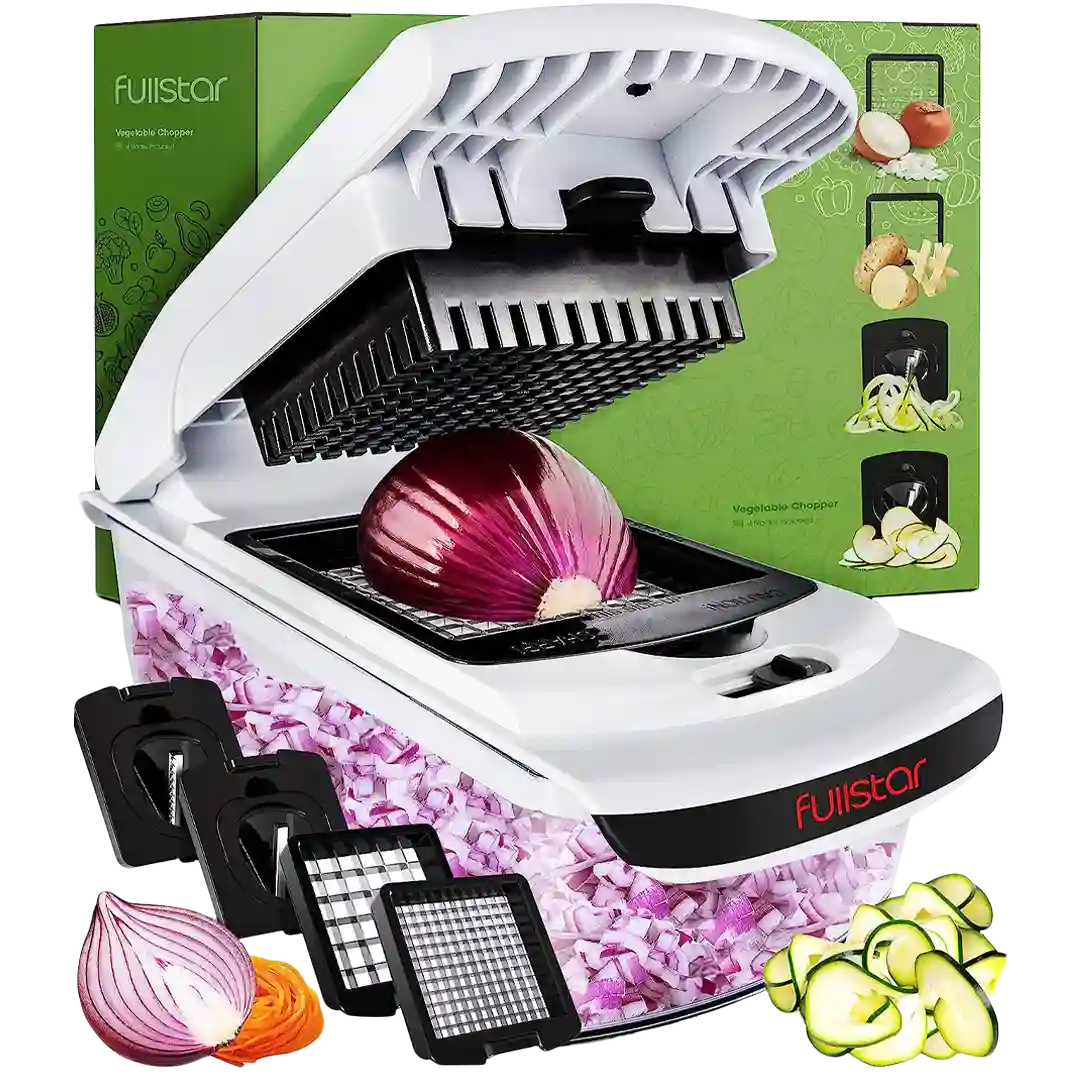
A food chopper might be right for you: Check Fullstar Vegetable Chopper on Amazon for $20 →
Frequently Asked Questions
Can a food chopper replace a food processor?
Not really. Choppers handle basic chopping and pureeing, but they can't slice, shred, grate, or knead dough. If you only dice onions and mince garlic occasionally, a chopper works fine. For anything beyond basic prep, you'll want a processor.
Which brands are most reliable for food processors?
According to Consumer Reports testing and Reddit community feedback, Cuisinart and Breville lead in reliability. Cuisinart offers 5-year motor warranties, while Breville's Sous Chef Pro comes with an industry-leading 25-year motor warranty. KitchenAid processors perform well in tests but only offer 1-year coverage.
Are manual food choppers worth it?
For occasional use, yes. They're affordable ($15-25), require no electricity, and clean easily. But users report needing significant force for dense vegetables, inconsistent results ("small pieces and then huge chunks"), and durability issues with plastic components. Consider them a supplement to other tools, not a primary solution.
How long do food processors last?
Quality processors from reputable brands last 7-15 years with proper care. The Cuisinart Custom 14 has a "proven 12-year track record" according to buying guides, and Breville's 25-30 year motor warranties suggest they expect even longer service life.
Sources
- Consumer Reports - Best Food Processors and Choppers 2026
- Consumer Reports - Food Processor & Chopper Buying Guide
- KitchenAid - Food Processor vs Food Chopper
- Breville - Food Chopper vs Food Processor
- Homes and Gardens - Food Processor vs Food Chopper
- RedRecs - Best Food Processors from Reddit
- Nemco - Manual Food Prep vs Food Processor
- Ofzen and Computing - Best Food Processor Deals January 2026
- Taste of Home - KitchenAid Food Processor Review
- Reviewed - Best Food Processors 2026