
Ecobee vs Honeywell: Which Smart Thermostat Actually Saves You More Money?
Based on expert testing from Bob Vila, TechGearLab, and real user experiences from forums and reviews
The short answer: Ecobee wins for tech-savvy homeowners who want premium features like air quality monitoring and Apple HomeKit integration, but Honeywell takes the crown for reliability, value, and HVAC professional trust. For most households, the Honeywell Home T9 delivers better bang for your buck at $199 vs Ecobee's $260. Get the Honeywell T9 on Amazon for $199 →
The Fighters
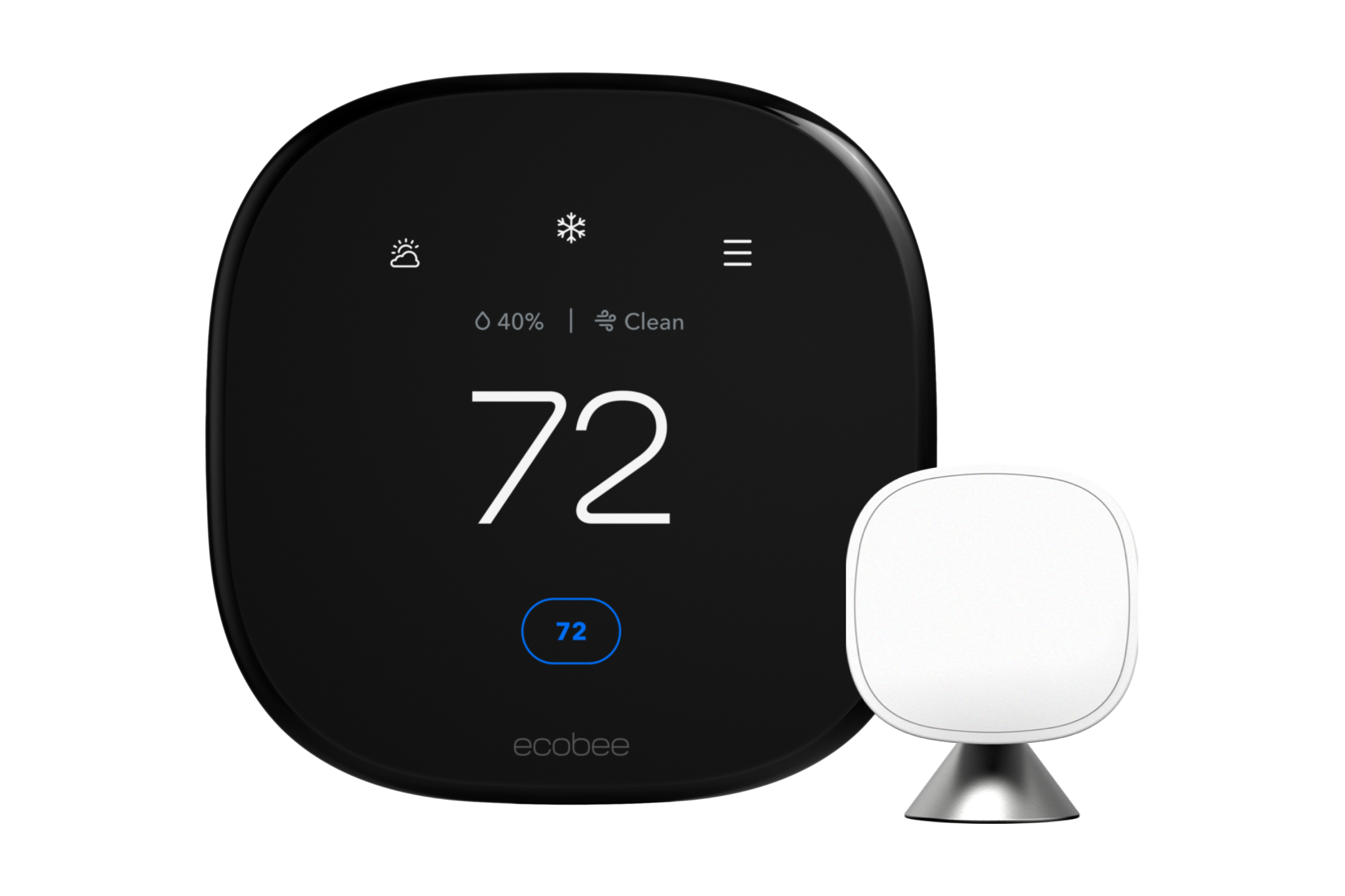
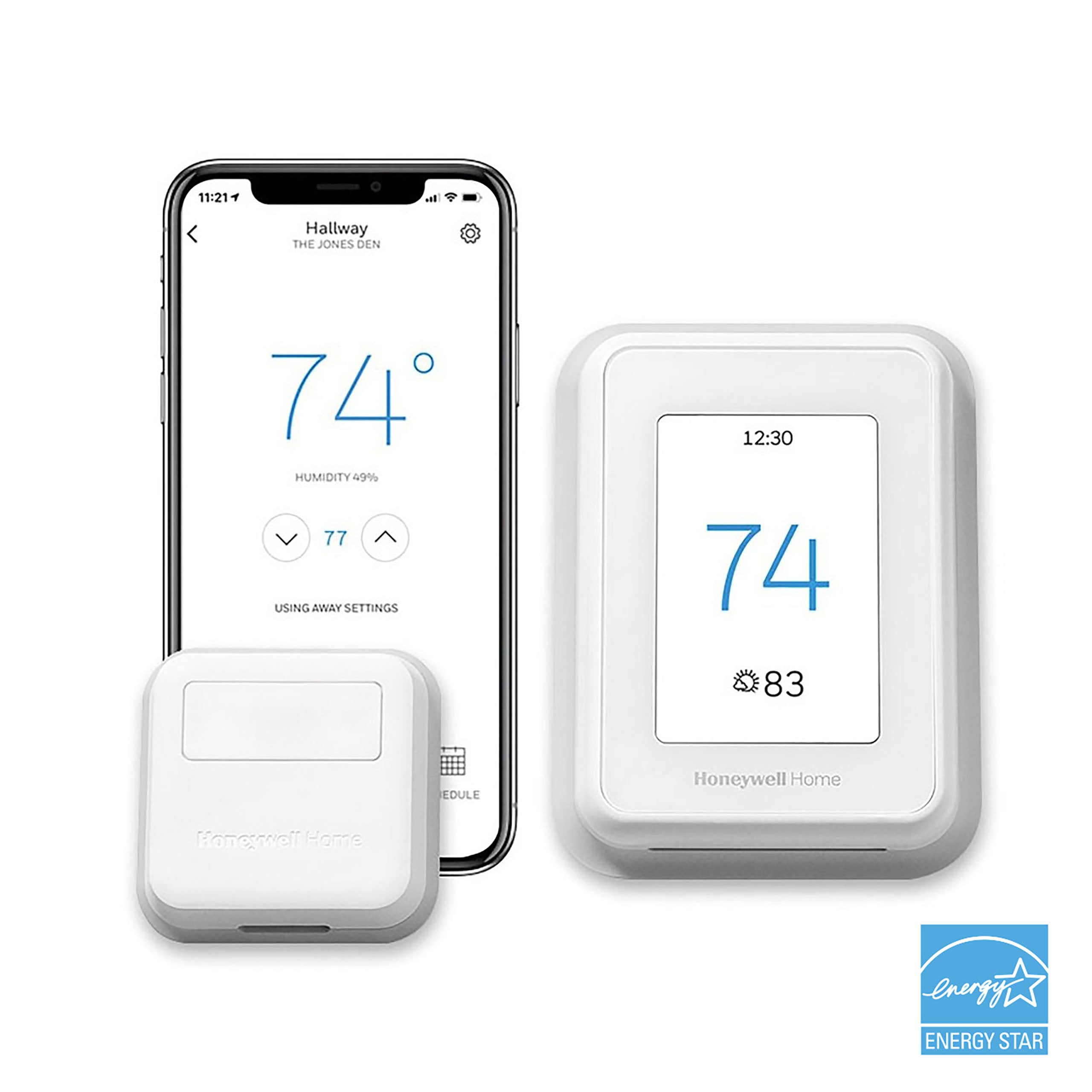
| Ecobee Smart Thermostat Premium | Honeywell Home T9 | |
|---|---|---|
| Price | $259 on Amazon | $199 on Amazon |
| Best For | Apple users, smart home enthusiasts | Value-seekers, traditional homeowners |
| Remote Sensors | 1 included, up to 32 supported | 1 included, up to 20 supported |
| Energy Savings | Up to 23-26% | Up to 20-25% |
| Warranty | 3 years | 1-2 years |
| Voice Assistants | Siri, Alexa (built-in), Google | Alexa, Google, Siri (limited) |
The Death Match: 6 Rounds, 1 Winner
We're scoring each round from 1-10. Higher score wins the round. Let's fight!
Round 1: Installation & Setup
Both thermostats require a C-wire connection, which is good news—you'll instantly know if your furnace loses power since the thermostat will go dark. But the setup experience differs significantly.
Ecobee's installation takes about 15 minutes with clear, well-organized instructions according to Bob Vila's testing. The thermostat connects quickly to Wi-Fi and pairs smoothly with the app, which has a clean layout and intuitive controls.
Honeywell's T9 earned a perfect 5/5 for installation in Bob Vila's tests—it "configures itself with its wire-sensing technology and includes a C-wire adapter, making do-it-yourself installation very simple." The video instructions match what's on screen, and the guided setup walks you through each step.
| Ecobee Premium | Honeywell T9 |
|---|---|
| 8/10 | 9/10 |
Round 1 Winner: Honeywell — Self-configuring wire detection and perfect test scores give it the edge.
Score after Round 1: Ecobee 8 | Honeywell 9
Round 2: Remote Sensor Performance
Here's where things get interesting. Both brands support room sensors to eliminate hot and cold spots, but they approach the problem differently.
Ecobee supports up to 32 sensors (vs Honeywell's 20) and uses motion-based occupancy detection. According to The Tech Influencer's sensor comparison, "When motion is detected, Ecobee prioritizes that room quickly—testers often saw the thermostat shift weighting within a couple of minutes."
Honeywell's T9 sensors measure temperature, humidity, AND occupancy (not just motion). The RedLINK 3.0 technology delivers a signal range up to 200 feet depending on home construction. One practical advantage: Honeywell sensors use standard AAA batteries that everyone has at home, while Ecobee uses proprietary coin cells.
| Ecobee Premium | Honeywell T9 |
|---|---|
| 9/10 | 8/10 |
Round 2 Winner: Ecobee — Support for 32 sensors and faster occupancy response wins this round.
Score after Round 2: Ecobee 17 | Honeywell 17
Round 3: Energy Savings
Both brands are ENERGY STAR certified and claim similar savings, but the methods differ.
Ecobee's Premium model claims up to 23-26% annual savings through its eco+ mode, radar occupancy sensor, and open-window detection that shuts off HVAC when a door or window has been left open for more than 5 minutes. According to Nassau National Cable's comparison, "The Ecobee system states they can save you up to 23 percent on your annual heating and cooling bill."
Honeywell claims 20-25% savings through learning algorithms. Per T3's analysis, "The Honeywell RTH9585WF will learn your habits. If you wake up every day at 6 am and turn your heating on to 74 degrees, the system will notice your daily pattern and lower consumption." This passive learning works better for people with consistent schedules.
| Ecobee Premium | Honeywell T9 |
|---|---|
| 8/10 | 7/10 |
Round 3 Winner: Ecobee — Active features like open-window detection and detailed energy dashboards provide more optimization options.
Score after Round 3: Ecobee 25 | Honeywell 24
Round 4: Smart Home Integration
If you're embedded in a particular smart home ecosystem, this round may be the deciding factor.
Ecobee dominates with Apple users. It fully supports HomeKit and Siri, and the Premium model has Alexa built-in—you can use it as a smart speaker. However, MacRumors Forums reports that 15-20% of users experience "No Response" errors in HomeKit requiring physical resets every 2-3 weeks.
Honeywell's T9 works with Alexa, Google Assistant, Samsung SmartThings, and has limited HomeKit support. The T6 Pro model with Z-Wave integration is particularly popular among Home Assistant users who want local control without cloud dependency. Plus, the Honeywell X2S is already Matter certified, future-proofing it for the emerging smart home standard.
| Ecobee Premium | Honeywell T9 |
|---|---|
| 8/10 | 7/10 |
Round 4 Winner: Ecobee — Built-in Alexa and full HomeKit support win for most smart home users.
Score after Round 4: Ecobee 33 | Honeywell 31
Round 5: Value for Money
This is where Honeywell fights back hard.
Ecobee Premium costs $259.99 and includes one SmartSensor. That's premium pricing, justified by premium features like air quality monitoring (VOCs and humidity), a built-in smart speaker, and 3-year warranty.
Honeywell T9 costs $199.99 with one sensor included—$60 less for a thermostat that earned 5/5 for Value in Bob Vila's testing. The reviewer noted it has "excellent room sensor prioritization" and "accurate, responsive touchscreen controls." If you want to go even cheaper, the Honeywell X2S earned a perfect 5/5 for value as "an excellent budget-friendly smart upgrade."
Per RedFlagDeals forums, HVAC technicians often recommend Honeywell: "Some lean toward Honeywell thermostats, noting they like the white look, that Honeywell is the world standard for controls, and they are only about $70 each" for basic models.
| Ecobee Premium | Honeywell T9 |
|---|---|
| 7/10 | 9/10 |
Round 5 Winner: Honeywell — Better price-to-performance ratio and HVAC professional endorsement.
Score after Round 5: Ecobee 40 | Honeywell 40
Round 6: Long-term Reliability
What do real users and HVAC professionals say after years of use?
Ecobee offers an industry-leading 3-year warranty, and long-term users report positive experiences. According to Undecided with Matt Ferrell, "Over four years of use, some users have never experienced an outage of the Ecobee internet connectivity, and even if there is one, the system can continue operating without it."
However, Honeywell has something Ecobee can't match: decades of HVAC professional trust. Per Heating Help Forum, one HVAC tech "was pushing the Honeywell T6 option hard, saying it was a better, more reliable thermostat, that they never break." The brand's reputation for "reliable performance" in the industry matters—these are the people who fix your furnace.
Both brands have reported issues. Ecobee users sometimes face HomeKit connectivity problems, while Honeywell users report touchscreen responsiveness issues and occasional Wi-Fi dropouts. Neither is perfect.
| Ecobee Premium | Honeywell T9 |
|---|---|
| 8/10 | 9/10 |
Round 6 Winner: Honeywell — HVAC professional endorsement and proven industry reputation edge out the competition.

Final Score
| Product | Total Score | Verdict |
|---|---|---|
| Honeywell Home T9 | 49/60 | WINNER |
| Ecobee Smart Thermostat Premium | 48/60 |
The Winner: Honeywell Home T9
This was incredibly close—just one point separating two excellent smart thermostats. Honeywell wins because it delivers outstanding value at $60 less than Ecobee, earns HVAC professional trust, and provides the best installation experience in testing.
The T9's perfect 5/5 scores for installation, ease of use, and value in Bob Vila's testing speak volumes. It does what a thermostat should do—regulate your home's temperature reliably—without the complexity of premium features most people won't use.
That said, Ecobee isn't far behind and excels in areas Honeywell can't match: air quality monitoring, Apple HomeKit integration, built-in Alexa, and support for up to 32 room sensors. If those features matter to you, the extra $60 is justified.
Ready to buy the winner? Get the Honeywell Home T9 on Amazon for $199 →
When the Loser Actually Wins
Ecobee isn't right for everyone, but it's the better choice if:
- You're an Apple user — Full HomeKit and Siri support vs Honeywell's limited implementation
- You care about air quality — The Premium model monitors VOCs and humidity with alerts
- You have a large home — Support for 32 sensors (vs 20) handles sprawling floorplans
- You want a built-in smart speaker — Alexa Built-in eliminates the need for a separate Echo
- You value longer warranty — 3 years vs Honeywell's typical 1-2 years
Ecobee might be right for you: Check price on Amazon →
Frequently Asked Questions
Do smart thermostats really save money?
Yes. Independent testing shows smart thermostats save 10-15% over basic programmable models. Both Ecobee (23-26%) and Honeywell (20-25%) claim higher savings under optimal conditions, and most pay for themselves within 2 years. The key is actually using the smart features—geofencing, scheduling, and room sensors all contribute to savings.
Which thermostat do HVAC professionals recommend?
Honeywell dominates among HVAC pros. Forum discussions consistently show technicians recommending Honeywell for reliability. One tech on Heating Help Forum stated they "never break." That said, both brands require C-wire connections, which pros prefer because you instantly know when the system loses power.
Can I install a smart thermostat myself?
Both Ecobee and Honeywell are designed for DIY installation. Honeywell's T9 earned a perfect 5/5 for installation in testing, with self-configuring wire detection. Ecobee installation takes about 15 minutes with clear instructions. However, if your home lacks a C-wire, you may need a professional to add one—Honeywell includes a C-wire adapter, while Ecobee sells one separately.
Which is better for renters?
Honeywell's lower price point makes it easier to justify for a temporary living situation. Both can be uninstalled and taken with you when you move. However, check your lease—some landlords require approval before modifying thermostats, even for smart upgrades.
Sources
- Bob Vila - Best Smart Thermostats 2026
- T3 - Ecobee vs Honeywell
- Nassau National Cable - Thermostat Comparison
- The Tech Influencer - Room Sensors Compared
- Undecided with Matt Ferrell - 4 Years with Ecobee
- Honeywell Home - T9 Product Page
- Ecobee - Smart Thermostat Premium
- Heating Help Forum
- RedFlagDeals Forums
- MacRumors Forums